Our constructed wetland systems do not require specialist labour or continuous monitoring. We recommend a minimal management routine based on three simple operations.
Emptying the septic tank and grease trap
Periodic emptying of the septic tank and grease trap by a vacuum tanker is essential for proper system operation. Any sludge, foam, oils or grease escaping from the pre-treatment stages would clog the inlet section of the gravel bed and block the distribution drain.
Frequency: every 12 months, assuming minimum pre-treatment capacity as specified in the design.
Inspection of inlet chamber and distribution drain
If sludge deposits are found inside the inlet chamber or near the distribution drain, accompanied by a strong unpleasant odour, proceed as follows:
- Immediately check the septic tanks and grease trap and empty them if necessary
- Remove the sludge material from the inlet chamber
- If the distribution drain is blocked, clear it by moving the gravel away from the perforations and removing the sludge
Frequency: every 6 months.
Weed control
Especially during the first months of operation, invasive weeds may take root on the gravel surface and inhibit the growth of the treatment plants. Simply pull out the weeds by hand.
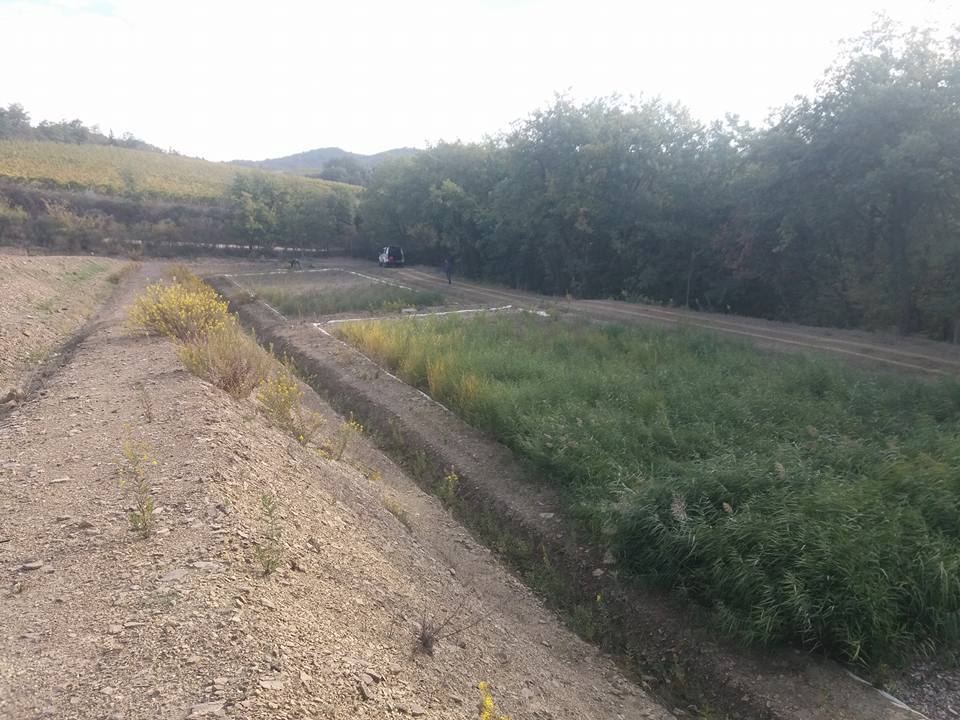
Once the aquatic plants are established, they will cover the entire surface and the problem resolves itself. Our systems are built to the highest standard and are not covered with soil or any other material that could impair their function — designed and built to last.
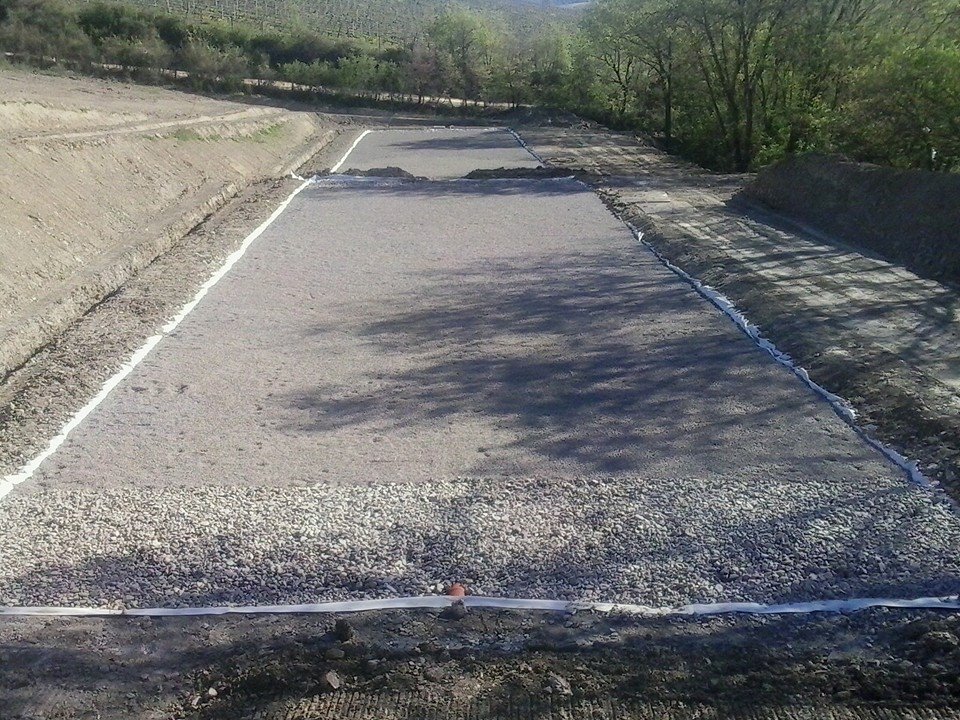
Before and after — the system grows naturally